
React2Shell (CVE-2025-55182): Vercel Races to Patch a Critical Next.js RCE Flaw
Running Next.js? React2Shell (CVE-2025-55182) enables remote code execution. Here's how Vercel responded and what you need to patch right now.
Vulnerabilities
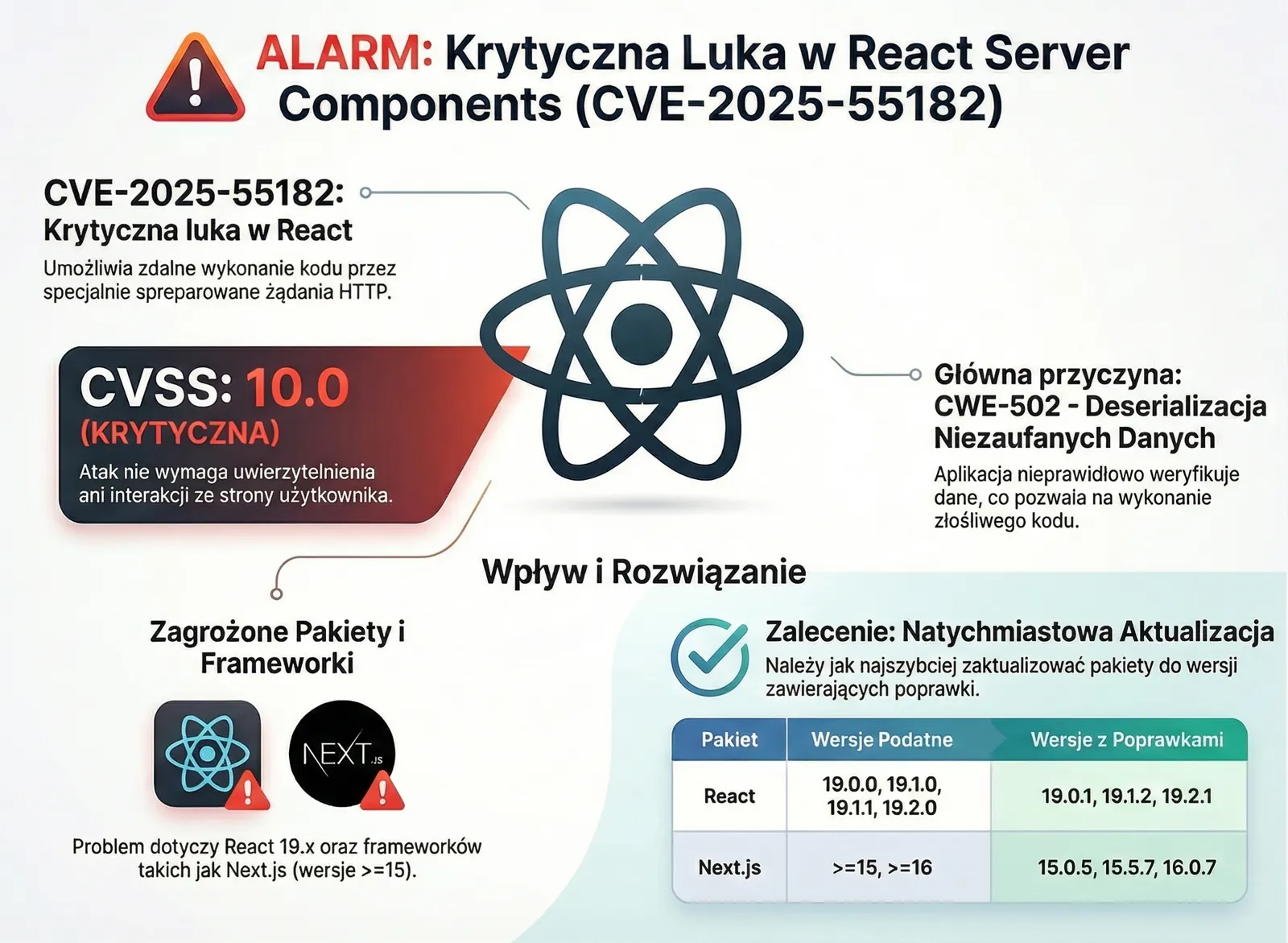
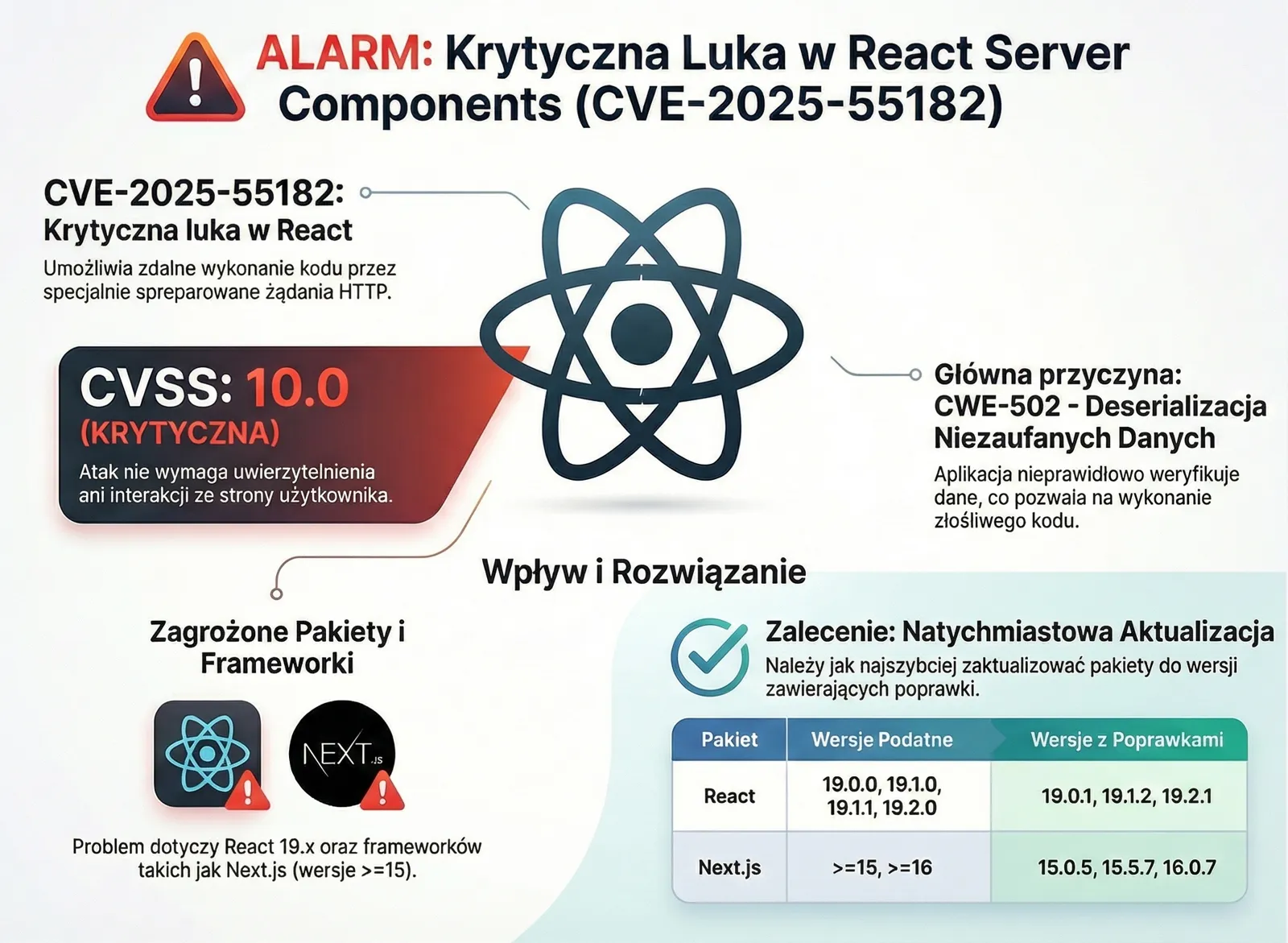
A critical flaw in React Server Components (CVE-2025-55182) enables unauthenticated remote code execution and scored a maximum CVSS 10.0. Patch now.
If you're a frontend developer (or a full-stack developer who pretends to enjoy CSS), I hope you weren't counting on a quiet Friday. News of a critical vulnerability in the React ecosystem has spread across the industry, and it's the kind that makes every admin's hair stand on end.
We're talking about CVE-2025-55182. What makes it so frightening? It earned a rare and "prestigious" CVSS 10.0 score. Yes, on a scale that tops out at ten. That means it's bad. Very bad.
The problem lies in React Server Components (RSC). In short, this mechanism deserializes data from untrusted sources (user input, for example) without proper validation. If you're thinking "that sounds like a textbook security hole," you're right.
An attacker can send a specially crafted HTTP request that the server will happily accept. Then, instead of rendering a component, the server executes the malicious code the attacker sent. This is full Remote Code Execution (RCE). It requires no privileges, no login, and no user interaction. The door is wide open.

The list is specific and includes some of the most popular tools in use today:
react-server-dom-parcel, react-server-dom-webpack, and react-server-dom-turbopack.If you run Next.js 15 or later with the App Router, you're in the crosshairs.
Don't panic (unless you haven't started updating yet). The library maintainers have risen to the occasion.
Good news for the procrastinators: if your app is hosted on Vercel, their team has already deployed WAF rules that block these attacks. But don't use that as an excuse. Update your packages!
See also: React2Shell: An In-Depth Technical Analysis - A deep dive into the deserialization mechanism and how this vulnerability can be exploited.
Read more
Running Next.js? React2Shell (CVE-2025-55182) enables remote code execution. Here's how Vercel responded and what you need to patch right now.
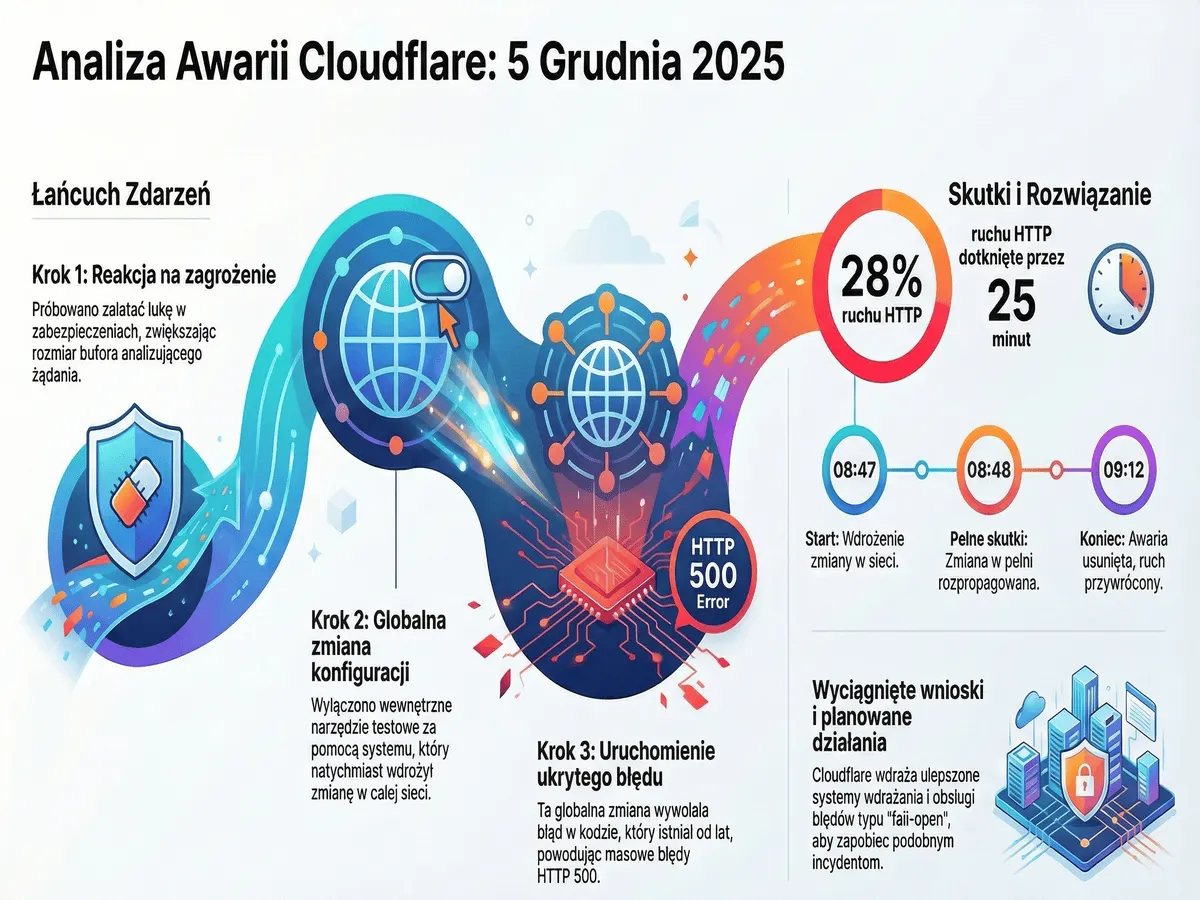
Cloudflare's 25-minute outage on December 5, 2025, explained: a React CVE fix, a WAF buffer change and a fatal Lua nil-value bug.
Zero-day vulnerabilities explained: how exploits work, the multimillion-dollar exploit market, Stuxnet and Pegasus, and how to defend in the AI era.
A free consultation with one of our experts — no obligation, in full confidence.
Let's talkWe'd like to use Google Analytics cookies to see how many people visit the site and which content is useful. We'll only set them if you agree. You can change your decision at any time via the “Cookie settings” link in the footer. Cookies Policy