
Critical FortiMail Zero-Day CVE-2026-104286 Exploited in the Wild: Patch Your Email Gateways Now
CVE-2026-104286 (CVSS 9.8) lets unauthenticated attackers write arbitrary files on FortiMail and is actively exploited. See patches and mitigations.
Vulnerabilities
CVE-2026-88779 in SAML-enabled NetScaler ADC and Gateway was exploited before a patch. Attackers inject commands via the username field. Patch now.

Citrix has released emergency patches for NetScaler ADC and NetScaler Gateway. Attackers were exploiting the vulnerability, CVE-2026-88779 (CVSS 8.7), before a fix was available. Citrix classifies it as a denial-of-service flaw. However, what has been seen in real attacks suggests it may also allow remote code execution.
The vulnerability affects appliances that use SAML authentication, meaning those configured as:
add authentication samlAction,add authentication samlIdPProfile.This setup is very common for single sign-on (SSO) to VPNs and corporate applications.
According to published reports, attackers enter shell commands in the username field. The commands download a malicious file from 213.209.159[.]55, save it as /v and run it. Even where the attack “only” crashes the appliance, an attacker can trigger the flaw over and over and cut the organization off from remote access.
On October 5, CISA added the flaw to its catalog of known exploited vulnerabilities. It gave federal agencies until October 7 to act and required them to check for signs of compromise.
Important: if you recently installed the patches for CVE-2026-88771 through CVE-2026-88778, you need to update your appliance again.
This is another round of NetScaler vulnerabilities this year. Edge devices that get patched only “when there’s time” are now one of the most common ways ransomware groups get in. These devices deserve their own faster patching process and continuous monitoring, for example through a SOC service.
Sources: BleepingComputer, CISO Series
Read more
CVE-2026-104286 (CVSS 9.8) lets unauthenticated attackers write arbitrary files on FortiMail and is actively exploited. See patches and mitigations.
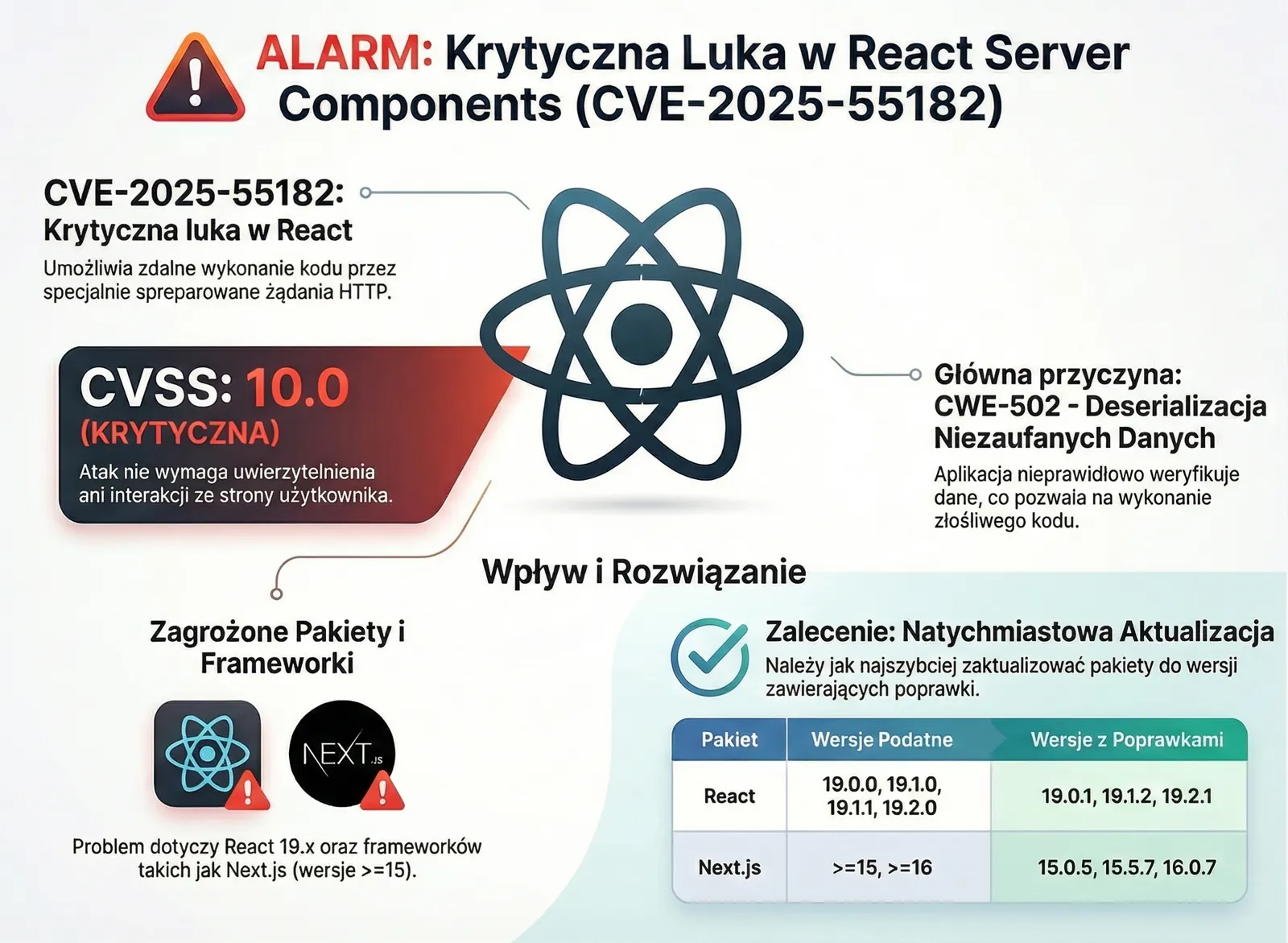
A critical flaw in React Server Components (CVE-2025-55182) enables unauthenticated remote code execution and scored a maximum CVSS 10.0. Patch now.
Cl0p exploited an Oracle E-Business Suite zero-day (CVE-2025-61882) to steal corporate data. Oracle's fix is out: patch now and check for compromise.
A free consultation with one of our experts — no obligation, in full confidence.
Let's talkWe'd like to use Google Analytics cookies to see how many people visit the site and which content is useful. We'll only set them if you agree. You can change your decision at any time via the “Cookie settings” link in the footer. Cookies Policy