Let's see how we can help you!
Leave a message and our dedicated advisor will contact you.
Send us a message
0/10000
Leave a message and our dedicated advisor will contact you.

This is no longer media speculation, but an official state strategy. Details regarding Operation Horizon (Operacja Horyzont), which is intended to be the response to the growing threat of sabotage, have appeared on government websites. As confirmed by the Ministry of National Defense, up to 10,000 soldiers from all branches of the Armed Forces will be involved in these activities.
This operation is a natural consequence and expansion of previous actions, such as "Safe Podlasie" (Bezpieczne Podlasie), "Eastern Aurora," and "Eastern Sentry." This time, however, the scale and objective are much broader—it concerns the physical protection of critical infrastructure, including key railway routes.
The decision to launch the operation was made at the highest level. Deputy Prime Minister and Minister of National Defense Władysław Kosiniak-Kamysz, together with Minister of the Interior Marcin Kierwiński and the Chief of the General Staff of the Polish Army, Gen. Wiesław Kukuła, clearly defined the goal: military support for the services subordinate to the Ministry of the Interior and Administration (MSWiA).
The situation requires decisive steps. As stated in the government communiqué, the priority is to counter acts of sabotage and diversion, as well as to limit the freedom of movement of potential perpetrators. The government is allocating record funds in history for security, which is expected to translate into real operational capabilities in the field.
Interestingly, the government strategy does not rely solely on uniforms. The official messaging includes the term "citizen activation." Authorities are directly encouraging closer observation of one's immediate surroundings and the reporting of situations that may cause concern.
Digital Security: Just like with children online, proactive citizen vigilance can prevent threats before they gain momentum.
The goal is to introduce tools for society that make the actions of hostile services "unprofitable" and difficult to execute. It is in this context that the announced mobile application fits—a new tool intended to revolutionize the way citizens can cooperate with security services.
The Ministry of National Defense is working on a dedicated mobile application that is to serve as a direct link between citizens and the services responsible for security. According to Gen. Wiesław Kukuła, Chief of the General Staff of the Polish Army, work on the software has been ongoing "for a good few weeks," and the project is already at an advanced stage.
The new application has been designed with maximum simplicity of use in mind. It aims to eliminate the main problem currently faced by citizens trying to report suspicious activities—difficulties in pinpointing the exact location of an incident.
Key features of the application include:
As Minister Kosiniak-Kamysz emphasized during the press conference:
"It will be helpful in every situation. We will be able to use the actions of the cyber-forces to quickly and effectively report and show things. This is also about building a strong society that sees a threat and informs. It has prudence, but no fear. Because fear is the main goal of our adversaries."
According to the announced schedule:
Beta tests aim to verify the system's operation in practice and potentially refine the interface before mass implementation.
Importantly, authorities assure that reports submitted through the app will be treated with full seriousness. In the event of detecting real, suspicious activity, services are to react in immediate mode.
This is particularly important in the context of the upcoming Christmas holidays, when thousands of Poles will be traveling by rail and bus. As Minister Kosiniak-Kamysz noted, the early dusk at this time of year can provide "natural cover for sabotage groups" acting on behalf of foreign services.
Let us recall that this mobilization is a reaction to specific incidents. In recent months, services have thwarted attempts to derail trains using steel clamps and planted explosives. Perpetrators, acting on orders from foreign services, tried to cause land traffic disasters.
These unprecedented cases forced an intensification of actions and closer cooperation between services subordinate to both the Ministry of the Interior and Administration and the Polish Armed Forces, with particular emphasis on the Territorial Defense Forces.
Infrastructure Context: Recent Cloudflare outages (November, December) demonstrate how fragile critical infrastructure can be - both digital and physical.
Operation Horizon connects two worlds: hard military power (10,000 soldiers patrolling critical infrastructure) and the "soft" power of civil society equipped with smartphones and a dedicated app for reporting threats.
This innovative approach assumes that every citizen can become the eyes and ears of the services—not out of paranoia, but out of responsibility for common safety. The application is intended to make this engagement not only possible but also extremely simple: a few clicks on a phone can trigger a response from services and potentially prevent an act of sabotage.
During the press conference, Minister Kierwiński emphasized the importance of cooperation:
"This is another operation intended to show that police officers, guards, firefighters, and soldiers will work shoulder to shoulder. Without this joint operation, we would not have achieved over 98% effectiveness in preventing illegal border crossings. Infrastructure is essential, but without the cooperation of people, it would not be possible."
Next year, the government has record funds at its disposal—200 billion PLN for security. This translates not only into equipment and training but also into innovative technological solutions combining the potential of the military with social engagement.
Will this hybrid defense model pass the test? We will know the first answers in December when the application reaches the hands of the first users. One thing is certain: in the face of growing hybrid threats, Poland is trying to respond with hybrid defense.
Author: Aleksander
Sources:

Chief Technology Officer at SecurHub.pl
PhD candidate in neuroscience. Psychologist and IT expert specializing in cybersecurity.

In 2024, Poland’s energy sector was hit by over 4,000 cyber incidents, making up 4.5% of all national attacks. Experts warn that 2025 will be even more challenging, with rising risks from disinformation and hybrid threats.
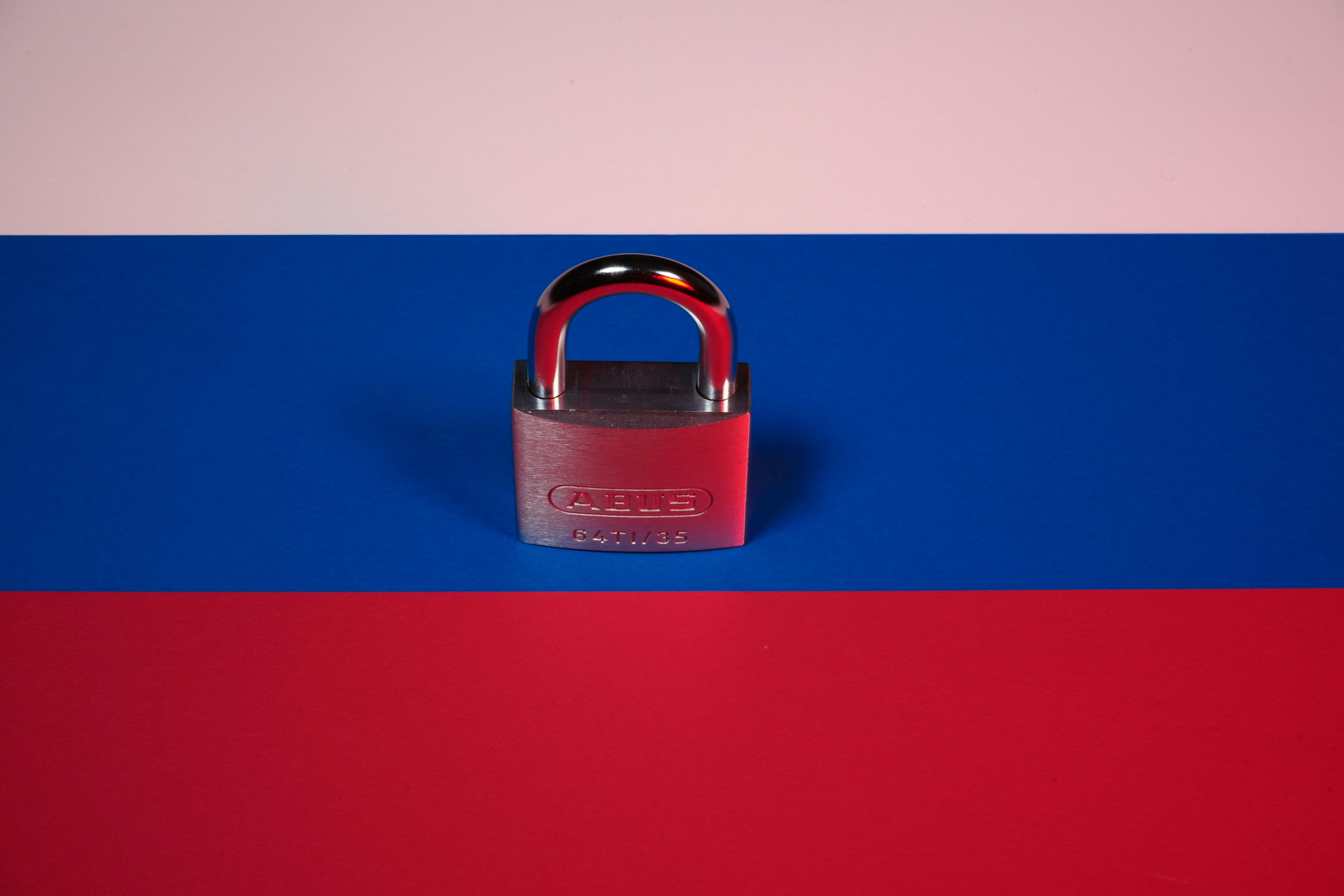
Poland tops global charts for cyberattacks with over 300 Russian incidents daily targeting critical infrastructure like hospitals and water systems. PM Tusk\

A major restructuring in the Polish Police. The Central Bureau for Combating Cybercrime (CBZC) is merging with the CBŚP (Central Police Investigation Bureau) to form a new super-unit: the National Investigative Bureau.
Loading comments...